- Volleyball
Indoor Vs. Outdoor Volleyball Court Flooring
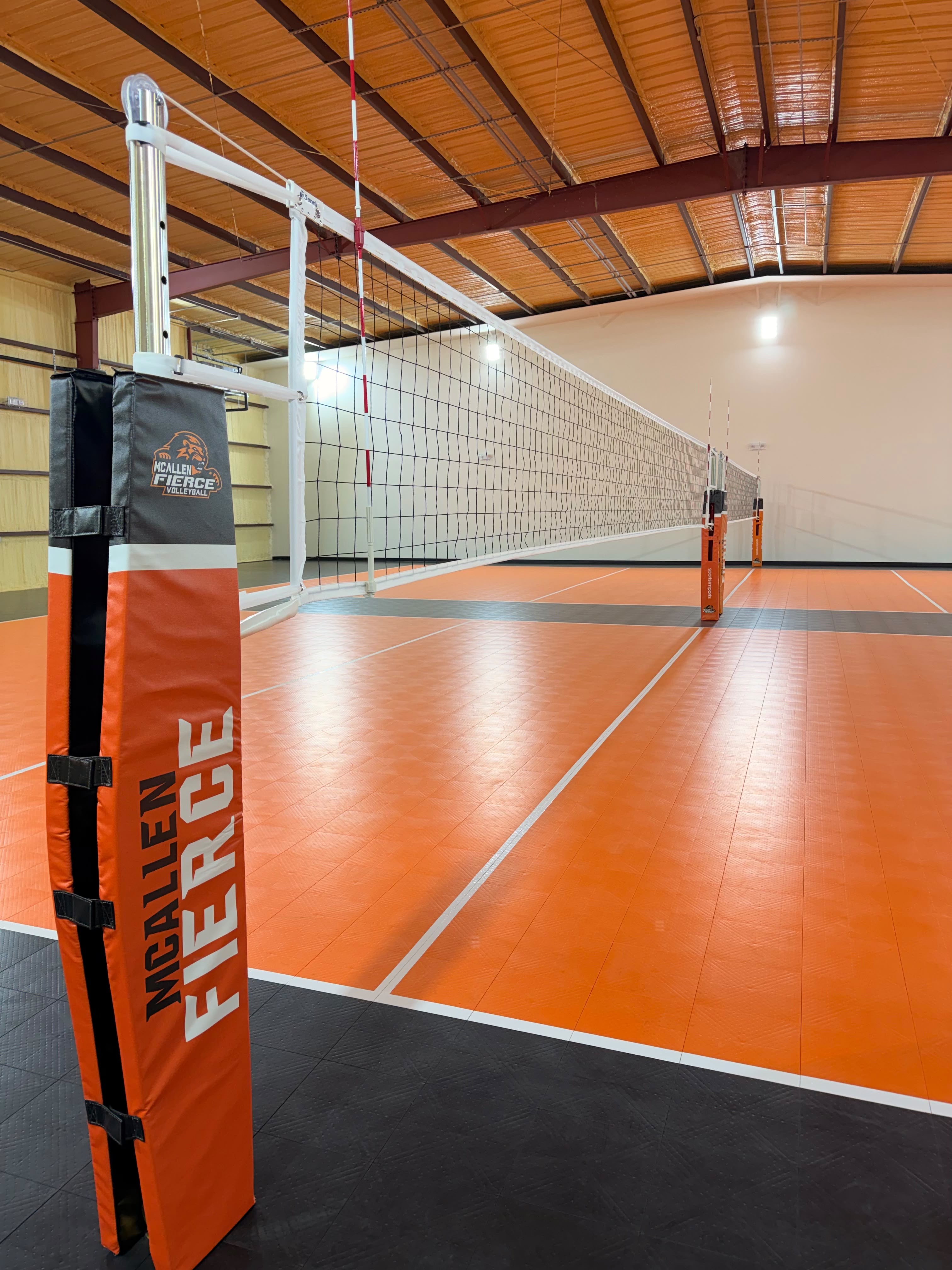
Whether you are outfitting a high-performance collegiate fieldhouse or building a casual backyard multi-use court setup, choosing the right volleyball court flooring comes down to balancing impact protection, environmental resilience, and playability.
Outdoor surfaces and indoor volleyball courts seem like they would have significant overlap, but ultimately they each operate in completely different worlds: while indoor surfaces focus heavily on high-level shock absorption, slide-worthiness, and customization options, outdoor courts must withstand the natural wear from weather exposure, temperature shifts, and heavy moisture without warping or degrading. From traditional hardwood and indoor vinyl to weather-resistant modular tiles and sand, understanding the key differences in materials, maintenance, and safety features will help you select the ideal surface for your facility's specific climate and athletic goals.
Indoor vs. Outdoor Volleyball Court Flooring: Key Differences
Indoor and outdoor volleyball courts have different performance and environmental requirements. Here is a quick comparison of the key differences to consider when choosing a volleyball court surface.
| Indoor Volleyball Flooring | Outdoor Volleyball Flooring | |
|---|---|---|
| Common Surfaces | Hardwood, rolled rubber, modular tile | Sand, grass, modular tile |
| Primary Considerations | Shock absorption, traction and player comfort | Weather resistance, moisture and durability |
| Environment | Climate-controlled indoor spaces | Exposed to weather and temperature changes |
| Maintenance | Varies depending on the flooring material | Requires materials designed to withstand outdoor conditions |
| Multi-Sport Use | Ideal for gyms and multi-purpose facilities | Ideal for backyard and recreational multi-sport courts |
| Mateflex Option | ProGym | HomeCourt |
What Surfaces Are Used For Indoor Volleyball?
When outfitting an indoor volleyball gym, facilities typically rely on three primary surface options, each tailored to different budget levels and performance needs.
Hardwood Volleyball Court Flooring
Solid maple hardwood remains the gold standard for those with the budget for the initial and maintenance costs. Hardwood courts certainly provide a high-quality feel and look, offering very good shock absorption when compared to bare concrete, a traditional aesthetic, and excellent multi-directional traction for aggressive dives and plants. The primary drawback to an indoor hardwood court is absolutely the cost over the course of the courts lifespan and the amount of time dedicated to maintenance every year or so, but there is no denying the value of a quality indoor hardwood court.
Rolled Rubber Volleyball Flooring
Rolled rubber flooring is another option that is preferable to high-end gyms dedicated to volleyball use. These surfaces provide quality shock absorption, court customization options, and are very comfortable on players joints during play. Much like hardwood surfaces however, the initial price and maintenance costs over the years tend to be very high, and replacing a damaged area will involve professionals and down-time to return to play.
Modular Indoor Volleyball Court Tiles
Last but not least, indoor modular tiles, such as specialized smooth-top polypropylene tiles, offer a cost-effective, versatile solution for indoor volleyball gym flooring. Tiles like ProGym by Mateflex snap together easily for fast installation or disassembly, feature built-in lateral forgiveness to protect athletes' knees and ankles, and deliver a reliable, low-maintenance volleyball court surface ideal for multi-purpose school gyms and recreational community centers.
Modular tile systems can be portable or assembled for temporary use as well and then packed away for the off-season, and fixes to any damaged areas are extremely easy. Removing a damaged tile and replacing a single piece or a large section of material can be achieved by just about anybody in a matter of minutes. This is an excellent option for those looking to include a splash of color and quality to their existing gym floor without the need to re-design or accrue major demolition costs in their space. Because ProGym is free-floating, it can easily be laid over an existing court surface and removed as needed.
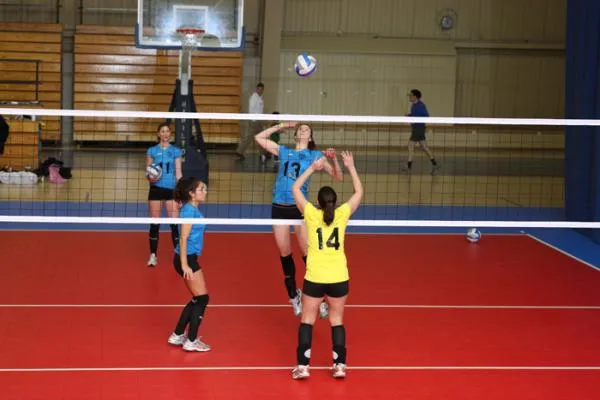
A Player Leaps for a Spike on ProGym Modular Volleyball Court Tile
What Surfaces Are Used For Outdoor Volleyball?
Sand, Dirt and Grass Volleyball Courts
While indoor volleyball courts tend to have a few options that will cater to varying budget levels, both up front and annually for maintenance, as well as player and coach preferences for both feel under foot and aesthetic options, outdoor volleyball courts tend to lean towards a more natural surface like sand, dirt or grass.
Outdoor beach volleyball tends to be a more popular option with its own set of rules, and ultimately this is typically played over a sand surface, although not necessarily always at the beach.
Modular Outdoor Volleyball Court Tiles
For those who may already have an existing concrete or asphalt pad, such as a homeowner with a backyard basketball court, a park and rec department that is looking to re-purpose one of their existing surfaces, or an athletic club that is interested in maximizing play time, an outdoor modular tile court like the HomeCourt tile is the perfect option to consider adding to their space.
HomeCourt Key Features for Outdoor Volleyball Use:
- Rounded edges and corners to prevent jersey snags or cuts to diving players
- Accurate game line painting
- Smooth top surface provides a comfortable experience for both competitive and casual players
- 21 stock colors to allow for maximum court customization
- Easy to install to minimize overall cost
- Low maintenance to minimize down time
- Additional court game lines can be added to allow for a variety of games to be played on the same surface
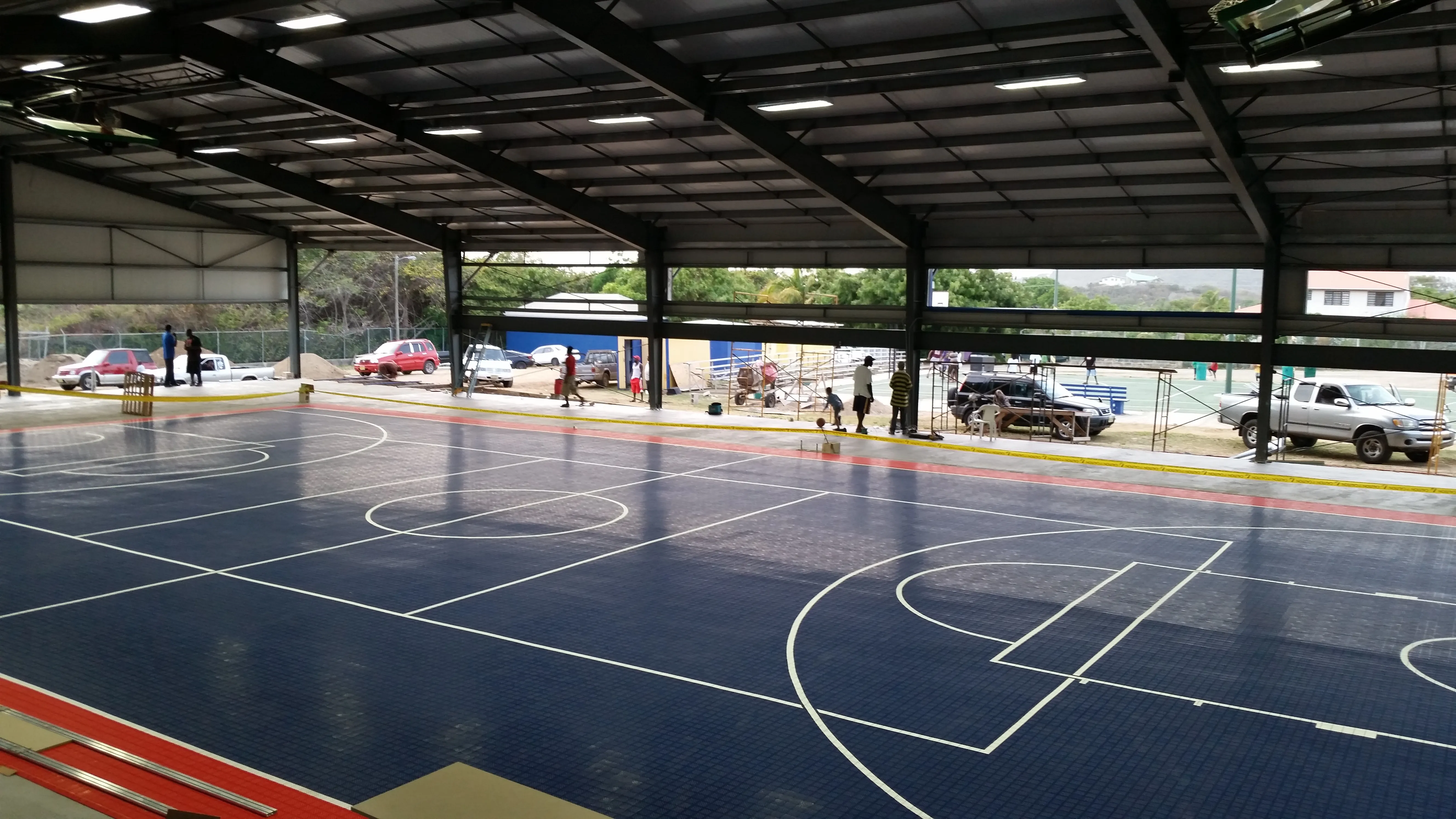
Outdoor Basketball and Volleyball Court on HomeCourt
Choosing the Right Volleyball Court Flooring
Whether you are interested in building a multi-court facility with tournament grade volleyball court surfaces, or just interested in a place to play around your backyard, Mateflex has an excellent option that will need to be considered. Our Build Your Court tool is an excellent place to start your planning as well. Contact a Mateflex sales rep today to get started!