- Volleyball
Wooden vs. Modular Gym Flooring: A Complete Comparison
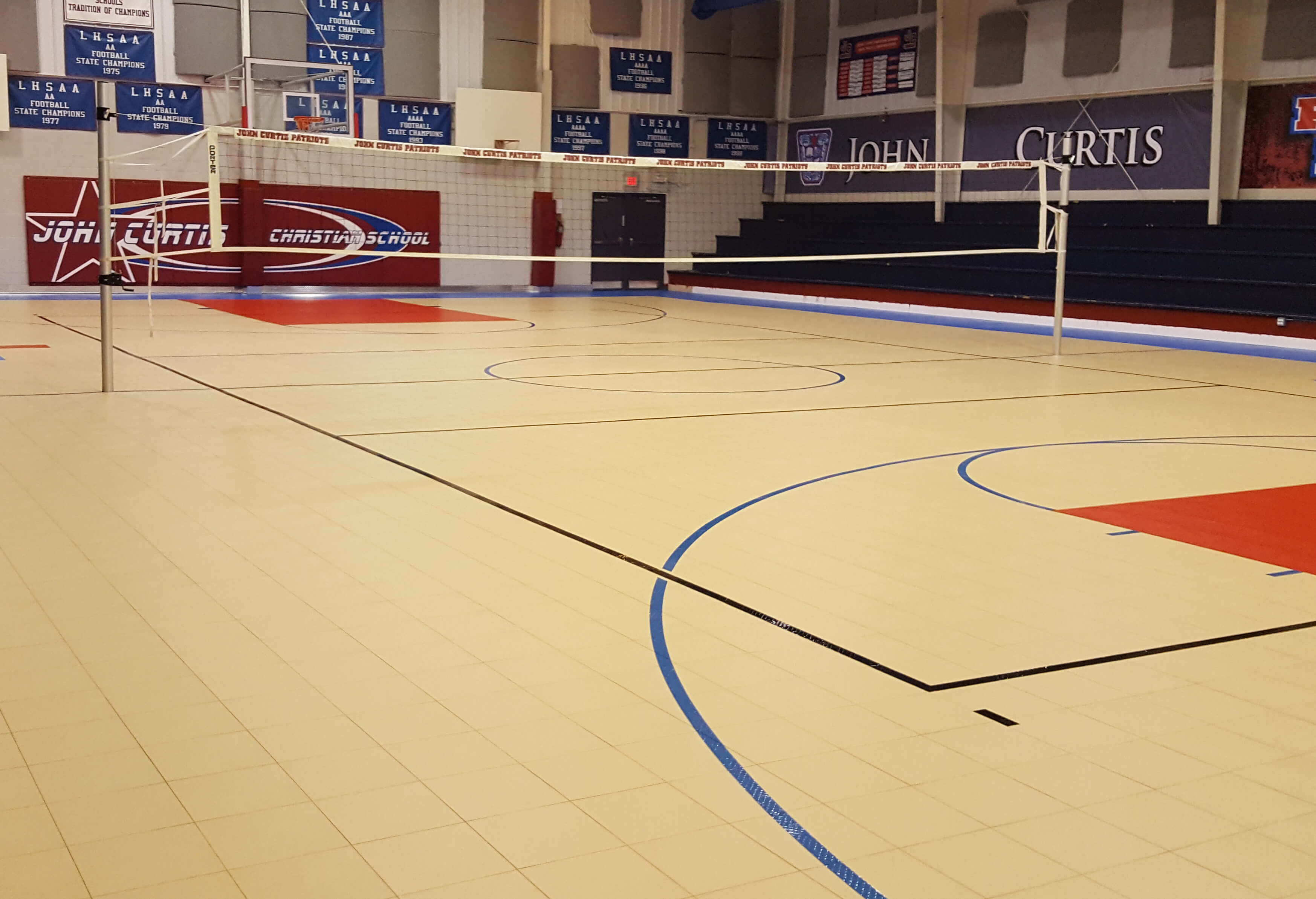
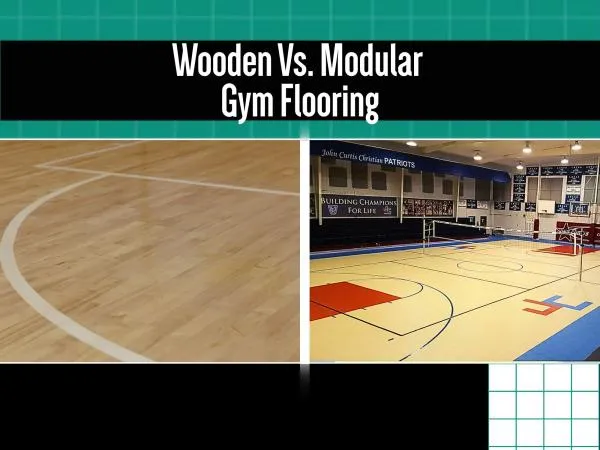 Whether you’re in need of an indoor or outdoor basketball court, volleyball court or pickleball court, choosing the right athletic flooring is one of the most critical decisions for any facility, community sports hall, or school gym. Do you opt for the timeless, traditional appeal of a maple hardwood gym floor, or embrace the versatility and modern technology of modular polypropylene tiles? The best choice depends on your facility’s budget, usage, and long-term goals.
This comprehensive guide breaks down the key differences between traditional wood and modern modular gym flooring, covering everything from cost and installation to maintenance and performance.
Quick Comparison: Wood vs. Modular Flooring
|
Feature |
Traditional Wood Flooring (Maple) |
Modular Flooring (Polypropylene) |
|
Initial Cost |
High ($$$$) |
Low-Medium ($$) |
|
Installation Time |
Weeks |
Days |
|
Lifespan |
30-75+ years (with refinishing) |
20-30+ years |
|
Maintenance |
Daily cleaning, periodic refinishing |
Daily cleaning, no refinishing needed |
|
Versatility |
Limited (sports only without a cover) |
High (multi-purpose, various sports) |
|
Moisture Resistance |
Low |
High |
What Are Gym Floors Made Of? The Core Materials
Understanding what goes into each flooring type is the first step in making an informed decision.
Traditional Gym Floors: Solid Maple Hardwood
For decades, North American hard maple has been the gold standard for gymnasium floors, especially for applications like a basketball court floor and indoor volleyball courts. Its dense grain structure provides exceptional strength, dent resistance, and shock absorption. This point-elastic surface responds beautifully to athletic impact, which is why it's the preferred choice for the NCAA and NBA.
Modern Gym Floors: High-Impact Polypropylene
Modular sports flooring is engineered from polypropylene, a high-impact polymer designed for toughness and resilience. These floors consist of interlocking tiles that create a durable and customizable surface. Indoor specific materials can be non-porous and resistant to water damage, making it a robust solution for a wide range of environments, including those where humidity and excess moisture are a concern.
Gym Flooring Cost: A Wood vs. Modular Breakdown
Budget is often the primary consideration. It’s crucial to look at both the initial investment and the long-term upkeep.
- Initial Investment: A traditional maple hardwood floor is a significant capital investment. The material and specialized labor required for installation can make it several times more expensive than a modular floor. Modular tiles, by contrast, offer a much lower upfront cost, making them an accessible option for facilities with tighter budgets.
- Long-Term Costs: This is where the financial picture gets more complex. A hardwood floor can last for over 75 years, but only with proper care. This includes the recurring cost of sanding and refinishing every 5-10 years. Modular flooring requires significantly less maintenance—it never needs to be stripped or refinished—saving considerable time and money over its lifespan.
Installation Time and Requirements
The installation process for these two flooring types could not be more different.
- Wood Flooring Installation: Installing a hardwood gym floor is a meticulous, weeks-long process. The wood must acclimate to the facility's specific temperature and humidity for days before installation can even begin. This requires a stable, functioning HVAC system. The subfloor preparation is extensive, and the finishing process adds more time.
- Modular Flooring Installation: Modular tiles can often be installed in just a few days. The simple interlocking system requires minimal tools and training. Because the material is not affected by moisture, it can be installed in areas where hardwood would be unsuitable. Better yet, modular tiles can be installed either permanently or as a portable court surface option. Modular tiles can be uninstalled and moved to a new location, making it perfect for leased, seasonal, or temporary facilities.
Gym Floor Maintenance and Durability
The long-term appearance and safety of your floor depend on your maintenance routine.
- Hardwood Floor Maintenance: Properly cleaning a wood gym floor demands consistent care. Daily dust mopping with a microfiber mop is essential. Regular wet cleaning is also necessary to remove the slick film of sweat and residue left by athletes. Most traditional floors use a high-gloss or satin polyurethane finish, which protects the wood but requires specific cleaners to maintain its integrity and slip-resistance. To protect this investment during non-athletic events, a durable gym floor cover is not just recommended—it's essential.
- Modular Floor Maintenance: Modular flooring is far more forgiving. It requires the same routine dust mopping and scrubbing to stay clean, but it is resistant to moisture damage from spills, leaks, or floods. Its biggest advantage is that it will never need to be sanded down and refinished, eliminating the single largest maintenance task associated with gym floors.
Versatility, Portability, and Customization
How will your space be used? The answer may steer you clearly toward one option.
- Wood Flooring: Hardwood is unparalleled for basketball and volleyball but is less suitable for multi-purpose use. Street shoes, chairs, and tables can easily scratch or dent the surface. For non-sporting events like commencements, dances, or concerts, high-quality gym floor covers are mandatory to prevent damage.
- Modular Flooring: Here, versatility is king. As a true multipurpose gym flooring, modular tiles are designed for a wide array of activities, easily accommodating everything from volleyball and futsal to inline hockey and basketball. Furthermore, performance can be customized with a rubber underlayment, allowing you to dial in the exact level of shock absorption your athletes need. For outdoor courts, specially designed tiles like Mateflex III and TopCourt allow rainwater to drain through, ensuring a safe, durable surface. Last but not least, indoor modular tile surfaces are designed to float over an existing surface, meaning that your tiles can move with you should you need to relocate facilities or increase your court size. Modular tiles are an excellent option for those needing a portable sport surface for indoor or outdoor use.
Aesthetics: Classic vs. Customizable
There is no denying the stunning, classic beauty of a polished hardwood court. Logos and game lines can be painted on for a professional finish. In recent years, reclaimed gym flooring, with its painted lines and vintage character, has also become a popular aesthetic choice for certain applications.
However, modular flooring offers a level of gymnasium flooring design freedom that traditional timber sports flooring cannot match.
- Color & Design: Tiles come in a wide array of colors that can be mixed and matched to create unique patterns, borders, and keys. Because the color penetrates through the entire tile, it can never wear off.
- Wood-Look Options: If you love the look of wood but need the performance of modular, products like ProGym Plank offer a realistic wood-grain appearance with a durable clear wear layer.
Final Comparison: Pros and Cons
Hardwood (Maple) Gym Flooring
Pros:
- Unmatched classic, professional aesthetic.
- Excellent performance and shock absorption for basketball and volleyball.
- Extremely long lifespan (50-75+ years) with proper care.
- Made from renewable and biodegradable timber.
Cons:
- Very high initial purchase and installation cost.
- Requires costly and disruptive refinishing every 5-10 years.
- Highly susceptible to damage from moisture and ongoing fluctuations in humidity, which can cause warping or cupping.
- Limited to athletic use unless protected by a floor cover.
Modular Tile Flooring
Pros:
- Significantly lower initial cost.
- Fast and easy installation.
- Excellent for multi-purpose and multi-sport facilities.
- Resistant to moisture, humidity, and spills.
- Never requires sanding or refinishing.
- Portable and can be moved to a new location.
- Highly customizable in color, design, and performance.
Cons:
- Shorter lifespan than “perfectly” maintained hardwood.
Conclusion
The "better" floor truly depends on your facility's unique needs.
If you are building a dedicated indoor basketball or volleyball court where tradition, performance, and a very long lifespan are top priorities—and you have the budget for the upfront cost and ongoing maintenance—a traditional maple floor is an incredible choice.
However, if you need a durable, multi-purpose surface for a school gym, community center, or multi-use sports hall, or even a high-end home gym, where budget and versatility are key, modern modular flooring offers an unbeatable combination of value and design flexibility.
Frequently Asked Questions About Gym Flooring
Some older gym floors (typically those installed before the 1990s) used rubber-like polyurethane systems that contained mercury catalysts. If you are dealing with a very old floor, it's worth investigating its history.
In some cases, modular sports flooring can be installed over a thin carpet with a very low pile, but typically we recommend a hard, flat, and level subfloor like concrete, asphalt, or VCT (vinyl composite tile) to ensure stability and proper performance. Thicker carpet is too soft and will not provide a suitable base.
Yes, one of the major advantages of modular tiles is that they can often be installed directly over an existing hard, flat surface like concrete or even old vinyl tile, saving on demolition costs.
The in-bounds area of a standard sized pickleball court will measure 44’ long by 20’ wide, and with the regulation out of bounds area included, the total pickleball court dimensions will end up measuring 60’ long by 30’ wide. Interested in creating a pickleball court for casual backyard use but don’t have the space to fit the regulation size court? Mateflex can custom build your backyard pickleball court layout to fit any size!
There are several sizes to consider when planning to construct an indoor or outdoor basketball court. Professional and other high-talent leagues such as the NBA and NCAA will use an in-bounds area of 94’ x 50’ for their basketball court dimensions, and international leagues such as FIBA will specify a very similar size of 28 meters (92’ ft.) by 15 meters (49’ ft.). High School basketball court regulations call for an 84’ x 50’ in-bounds area, and younger leagues can have an even smaller court dimensions, most commonly a size of approximately 74’ x 42’.
Note that for safety purposes, it is highly recommended to add an additional 3’ - 5’ of sideline and 6’ - 10’ of endline space beyond the painted perimeter lines for extra out of bounds area so that players are not stepping directly off of the surface as they go out of bounds, this can create a tripping hazard and be dangerous to players if not accounted for. Luckily, Mateflex can create a custom court layout to fit your exact needs, no matter what size basketball court you will require.
Q: How long is a volleyball court? (What are the dimensions of a regulation volleyball court)?
A: There are two main sets of indoor volleyball court dimensions that are commonly seen in school sanctioned, club and casual play, and one has seemingly replaced the other as the more “standard” size. Traditionally, the in-bounds area of a volleyball floor would measure 60’ x 30’ in total, however the most recent update to most volleyball court construction guidelines will now call for a more metric-based sizing of 18m x 9m, approximately 59’ long by 29’ 6” wide.
After including the required out of bounds space, the total footprint of the court space will measure 27m x 15m (4.5m beyond each end line and 3m beyond each sideline, approximately 89’ - 90’ x 50’) per NCAA regulations rule 1.1.1, or 24m x 15m (3m beyond each side, approximately 79’ x 50’) per the USA Volleyball specs. Note again that planning for the correct court dimensions with the out of bounds space included is extremely important, as the current rules can penalize teams for having the incorrect court dimensions.
A new maple hardwood gym floor is a major investment, often ranging from $15 to $25+ per square foot installed, depending on the subfloor system and geographic location.
Typically, a hardwood gym floor requires a full sanding and refinishing every 5 to 10 years, depending on the level of use and the quality of daily maintenance.
Modular gymnasium flooring is a system of interlocking tiles made from high-impact polypropylene. It creates a durable, customizable, low-cost and low-maintenance option for those that are looking for an alternative to more expensive gym flooring options like hardwood or rubber gym flooring.
Sports flooring is specifically engineered for athletic performance and safety. It provides a unique balance of shock absorption (to protect athletes' joints), surface traction (for grip), and ball rebound. Regular commercial or residential flooring does not have these critical performance characteristics.
Hard maple is the industry standard for basketball courts due to its exceptional hardness, durability, and shock absorption properties, which help prevent player injuries.